OSHA's federal heat illness rule still isn't final. As of OSHA's 2026 regulatory agenda, it sits at the proposed-rule stage, with a supplemental proposal planned for December 2026 and final action listed for October 2027, dates that tend to slip1. That doesn't mean there's nothing to do. OSHA already enforces heat hazards under the general duty clause and a heat emphasis program that names HVAC, plumbing, electrical and roofing contractors among its targets2, and five states have their own rules in force.
The practical answer for a service contractor is a heat plan built on two triggers, 80°F and 90°F heat index, written so it works under the 2024 federal proposal, the state rules and the reality of attic work. This post lays out where the rules stand, what they agree on, and a plan you can run from dispatch.
Where the federal heat rule stands
The rule has been moving for five years. Here's the timeline from OSHA's own records13:
Oct 27, 2021
Advance notice
OSHA asks for input on a heat standard for indoor and outdoor work.
Aug 30, 2024
Proposed rule published
Heat Injury and Illness Prevention in Outdoor and Indoor Work Settings, 89 FR 70698, proposed as 29 CFR 1910.148.
Jan 14, 2025
Comment period closes
After an extension from December 2024.
Jun 16 to Jul 2, 2025
Informal public hearing
Testimony from employers, workers and safety groups.
Oct 30, 2025
Post-hearing comments close
OSHA's rulemaking page lists no later step.
Dec 2026 (target)
Supplemental proposal
Listed in OSHA's 2026 regulatory agenda. Expected to revise the 2024 draft.
Oct 2027 (target)
Final action
The agenda's target date. Agenda dates are plans, not commitments.
A supplemental proposal means another draft and another comment period before anything becomes final. Building your plan on the exact numbers in the 2024 draft is risky. Building it on the structure that the draft, the state rules and NIOSH's guidance all share is not.
What the 2024 proposal would require
The proposed rule would cover most employers, indoor and outdoor, with two triggers4:
| At or above | Proposed requirement |
|---|---|
| Initial trigger: 80°F heat index | Cool drinking water, enough for 1 quart per employee per hour; shade or a cool-down area; acclimatization for new and returning workers; a way for workers to take breaks when needed |
| High heat trigger: 90°F heat index | A paid rest break of at least 15 minutes every two hours; observation for signs of heat illness (a buddy system or a supervisor watching no more than 20 workers); contact with lone workers at least every two hours; a hazard alert before the shift |
| Always | A heat injury and illness prevention plan (written if you have more than 10 employees), a heat safety coordinator, training, and an emergency response plan |
Short exposures of 15 minutes or less in any 60-minute period would be exempt. The supplemental proposal may move any of these numbers, so treat this as the direction of travel, not the final text.
What OSHA enforces today
Without a heat standard, OSHA uses the general duty clause, which requires employers to provide a workplace free from recognized hazards likely to cause death or serious harm5. In April 2026 OSHA reissued its National Emphasis Program on heat for up to five years2. Three details matter for trade contractors:
- You're on the list. The program's construction targets include building equipment contractors (the industry group for HVAC, plumbing and electrical contractors) and foundation, structure and building exterior contractors, which includes roofing.
- Heat priority days start at 80°F. The program defines a heat priority day as one when the heat index is expected to reach 80°F or more, with more inspection activity on those days.
- Advisories trigger site visits. On days the National Weather Service issues a heat warning or advisory, OSHA offices can add construction sites to their inspection lists.
What the state rules already require
If you work in one of these states, a heat rule already applies to you. They differ in detail but share a shape67891011:
| State | Rule | Main trigger | Stronger steps | Notes |
|---|---|---|---|---|
| California (outdoor) | 8 CCR 3395 | Shade when over 80°F | High-heat procedures at 95°F for listed industries, including construction | Water 1 quart per employee per hour; new employees closely observed for 14 days in high heat |
| California (indoor) | 8 CCR 3396 | 82°F | Control measures at 87°F where feasible | In effect since July 23, 2024; exposures under 15 minutes per hour exempt |
| Washington (outdoor) | WAC 296-62-095 | 80°F (ordinary clothing) | At 90°F, paid cool-down rest of 10 minutes every 2 hours; at 100°F, 15 minutes every hour | Amended July 2023 |
| Oregon | OAR 437-002-0156 | 80°F heat index | Rest schedule at 90°F heat index | Water 32 ounces per employee per hour; in effect since June 2022 |
| Maryland | COMAR 09.12.32 | 80°F heat index, indoor or outdoor | At 90°F, at least 10 minutes rest every 2 hours; above 100°F, 15 minutes every hour | Water 32 ounces per employee per hour; effective September 30, 2024 |
| Nevada | R131-24 | Job hazard analysis | Written plan where hazards are found | Enforced from April 29, 2025; one-time analysis for employers with more than 10 employees |
Colorado's heat rule covers agriculture and Minnesota's covers indoor work12. New Mexico has proposed a rule that hasn't been adopted yet13. Check your own state plan before each summer; this list is growing.
Notice the agreement: an 80°F trigger for water, shade and acclimatization, and a 90°F step for scheduled rest and closer watching. A plan built on those two numbers will be close to compliant almost anywhere and easy to adjust when the federal rule settles.
Why service work is different: attics, roofs and lone techs
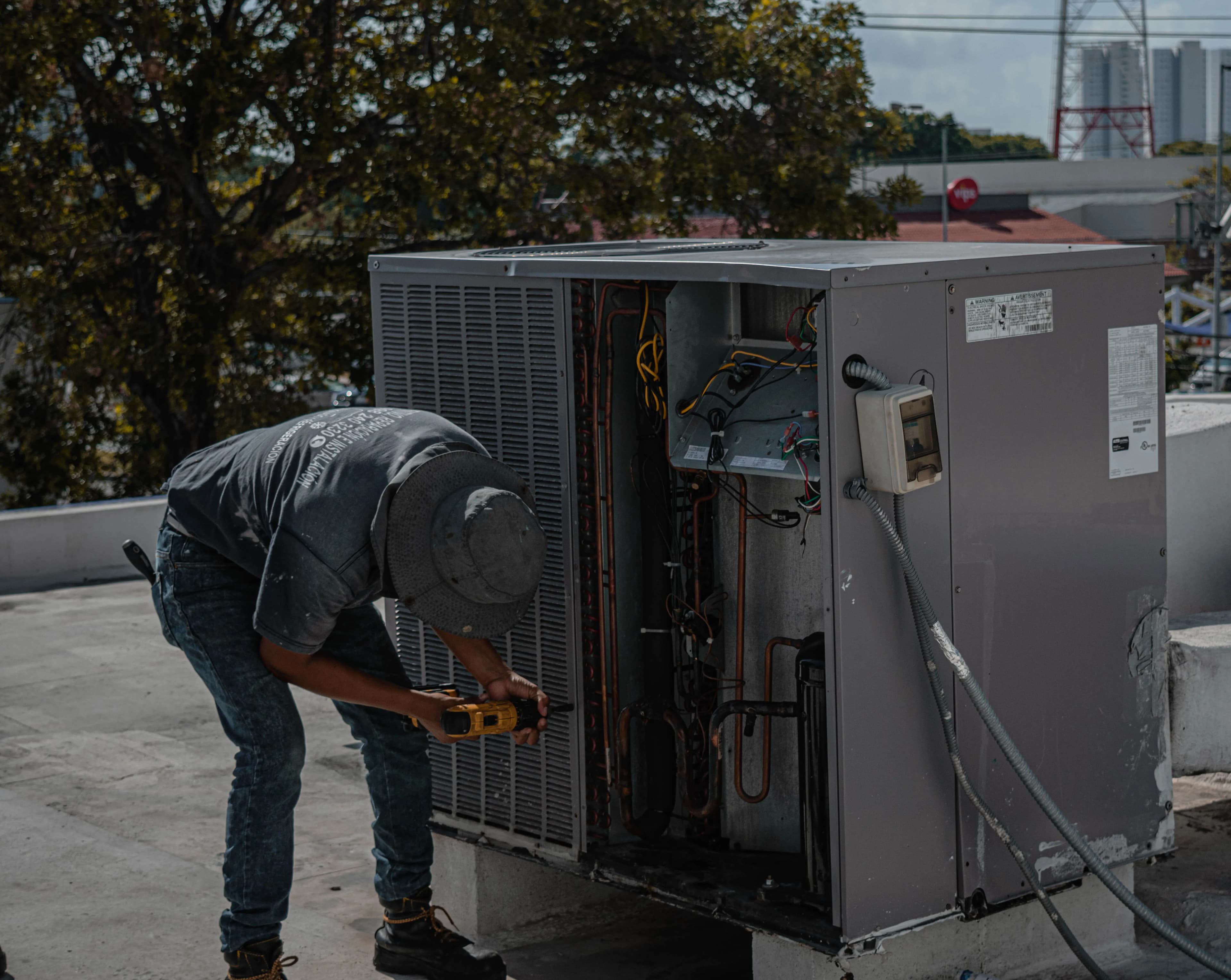
Heat rules are written around a heat index from the weather forecast. Service techs don't work in the forecast.
Direct sun adds heat the forecast doesn't show. The National Weather Service notes that exposure to direct sunlight can increase the heat index by up to 15°F14. A 90°F forecast heat index on a rooftop is effectively a high-heat day.
Roofs and attics are much hotter than the air. EPA reports that conventional dark roofs can reach summer peak surface temperatures of 150°F to 185°F15. The Florida Solar Energy Center notes that attic temperatures can rise far above 100°F during much of the year in the Sunbelt16. A tech changing a blower motor in an attic at 2 p.m. is working in conditions no outdoor forecast captures. In California, an attic is likely an indoor work area under the indoor rule; check with Cal/OSHA for your situation.
Techs often work alone. Crews can use a buddy system. A service tech in an attic on a solo call has nobody watching for confusion or stumbling, which are the signs that heat exhaustion is becoming heat stroke. The 2024 federal proposal would require contact with lone workers at least every two hours on high-heat days4; we'd make it more often in an attic.
The numbers on what happens when this goes wrong: BLS counted 48 worker deaths from exposure to environmental heat in 202417, and in 2021 and 2022 combined, construction had 620 heat-related injury and illness cases serious enough to involve days away from work18.
Acclimatization: the step that saves the most lives
If you do one thing from this post, do this one. OSHA's guidance on new workers is blunt:
Almost half of heat-related deaths occur on a worker's first day on the job
OSHA adds that over 70% of heat-related deaths happen in a worker's first week19. Bodies adapt to heat over several days. A new hire who started last Monday, or a tech back from two weeks off, hasn't adapted yet.
NIOSH's recommended schedule20, which the 2024 proposal closely follows4, limits time in the heat for the first days:
| Day | New worker: maximum share of usual heat exposure | Returning worker (away more than a week or two) |
|---|---|---|
| 1 | 20% | 50% |
| 2 | 40% | 60% |
| 3 | 60% | 80% |
| 4 | 80% | 100% |
| 5 | 100% | 100% |
For a service tech, "heat exposure" isn't the whole shift. It's time in attics, on roofs and in direct sun. Translate the table into dispatch rules:
- 1
Day 1 for a new hire
No attic or rooftop work after 10 a.m. Indoor calls, crawlspaces in the morning, shop and truck setup. If the shift is 8 hours, no more than about 1.5 hours in the heat.
- 2
Days 2 and 3
One morning attic or rooftop job, then indoor or shaded work. Pair them with a mentor; this fits naturally into the first rungs of a ride-along program.
- 3
Day 4
Normal assignments in the morning; avoid the hottest afternoon jobs.
- 4
Day 5 onward
Normal schedule, with the same high-heat rules as everyone else.
- 5
Returning techs
Anyone back from a week or more off (vacation, illness, a cooler job site) gets the shorter returning schedule. Dispatch needs to know who that is.
The ride-along program is the natural place to build this in: a new tech's first week is already mostly watching and helping, which makes it easy to keep them out of the 3 p.m. attic.
A two-trigger heat plan for a service shop
Here's the plan, written around the two numbers the rules share. Adjust it to your state's rule where it's stricter.
Below 80°F heat index: normal operations, water on every truck, training done in spring.
At 80°F heat index (initial trigger):
- Cool water available for at least a quart per tech per hour. NIOSH recommends drinking about a cup every 15 to 20 minutes, which works out to the same amount20.
- Shade or air-conditioned space available for breaks: the truck cab with the AC running counts if it's there when needed.
- Acclimatization schedule enforced for new and returning techs.
- Techs can take a cool-down break whenever they need one, without asking twice.
At 90°F heat index, or 80°F with direct sun on a roof or any attic work (high trigger):
- Paid rest break of at least 15 minutes every two hours in shade or AC.
- Check-in with every tech working alone at least every two hours, and before and after any attic job.
- Attic and rooftop work scheduled before noon where possible; afternoon attic jobs moved, split or staffed with two.
- A heat alert at the morning huddle: today's forecast, the trigger reached, the plan.
Every day in season:
- Know the signs: heavy sweating, cramps, dizziness, nausea, confusion. Confusion or collapse means call 911 and start cooling immediately.
- Name a heat safety coordinator, usually the service manager or lead dispatcher.
What the plan costs: a worked example
Owners worry that rest breaks will wreck summer capacity. Run the numbers. All inputs below are hypothetical.
Say a 10-tech shop has 30 days a year at or above the high heat trigger. Two 15-minute breaks in an 8-hour shift come to 30 minutes per tech per day (some plans add a third).
Hypothetical cost of high-heat rest breaks
The $42.77 is a rough loaded cost for a median HVAC tech, built from BLS wages and employer cost data in our HVAC technician salary guide. At three breaks a day the figure is about $9,600. That's real money, and much of it comes back: a tech who takes a 15-minute break in the cab is less likely to make the mistakes and callbacks that come with working exhausted. And it's small next to the cost of losing a tech for the season, which we worked through in why technicians quit.
The cost that matters more is capacity on the hottest days, when no-cool calls are piling up. That's a staffing question: the heat wave staffing playbook covers on-call rotations and triage for the weeks when demand and heat peak together.
Putting it into your system
A heat plan fails when it lives in a binder. It works when it's part of how the day is dispatched and recorded. Two pieces of TradesWork help: forms and checklists can attach a short heat check to job types like attic or rooftop work, set to open on arrival, and timesheets include a built-in Rest break time code, so paid cool-down breaks are recorded rather than remembered. Neither one reads the weather for you; the trigger call is still made at the morning huddle.
Heat illness prevention plan checklist
- Written plan naming your triggers (80°F and 90°F heat index, or your state's numbers)
- Heat safety coordinator named
- Water for at least a quart per tech per hour on every truck
- Shade or AC break space defined for job sites and trucks
- Acclimatization schedule for new and returning techs, built into dispatch
- Attic and rooftop work moved to mornings on high-heat days
- Check-in schedule for lone techs, including before and after attic jobs
- Paid rest breaks at the high trigger, recorded on timesheets
- Spring training on signs of heat illness and when to call 911
- State rule checked each spring, plus OSHA's rulemaking page for the federal status
Footnotes
-
Heat Injury and Illness Prevention in Outdoor and Indoor Work Settings, RIN 1218-AD39, Unified Agenda of Regulatory and Deregulatory Actions, Office of Information and Regulatory Affairs, 2026 agenda. ↩ ↩2
-
CPL 03-00-024, National Emphasis Program: Outdoor and Indoor Heat-Related Hazards, OSHA, effective April 10, 2026; news release. ↩ ↩2
-
Heat: Rulemaking, Occupational Safety and Health Administration. ↩
-
Heat Injury and Illness Prevention in Outdoor and Indoor Work Settings, proposed rule, OSHA, Federal Register, 89 FR 70698, August 30, 2024. ↩ ↩2 ↩3
-
Heat: Overview, Occupational Safety and Health Administration. ↩
-
8 CCR 3395, Heat Illness Prevention in Outdoor Places of Employment, California Department of Industrial Relations. ↩
-
8 CCR 3396, Heat Illness Prevention in Indoor Places of Employment, California Department of Industrial Relations. ↩
-
WAC 296-62-09547, High heat procedures, Washington State Legislature (part of WAC 296-62-095, outdoor heat exposure). ↩
-
Heat illness prevention rules (publication 5866), Oregon OSHA. ↩
-
COMAR 09.12.32, Heat Stress Standards, Maryland Code of Regulations; see also MOSH heat stress. ↩
-
Nevada OSHA heat regulation enforcement begins April 29, 2025, Nevada Department of Business and Industry, April 2025. ↩
-
Heat: Standards, Occupational Safety and Health Administration (state heat standards list). ↩
-
Heat Illness and Injury Prevention rulemaking, New Mexico Environment Department, Occupational Health and Safety Bureau. ↩
-
What is the heat index?, National Weather Service. ↩
-
Reducing Urban Heat Islands: Compendium of Strategies, Cool Roofs, U.S. Environmental Protection Agency. ↩
-
Radiant Barriers: A Question and Answer Primer (FSEC-EN-15), Florida Solar Energy Center, University of Central Florida, 2005. ↩
-
Fatal occupational injuries by event or exposure (drilldown), 2024, Census of Fatal Occupational Injuries, U.S. Bureau of Labor Statistics. ↩
-
It's summer, and it's hot on the job, The Economics Daily, U.S. Bureau of Labor Statistics, June 2024. ↩
-
Heat: Protecting New Workers, Occupational Safety and Health Administration. ↩
-
Criteria for a Recommended Standard: Occupational Exposure to Heat and Hot Environments, NIOSH Publication 2016-106, February 2016. ↩ ↩2
-
NWS HeatRisk, National Weather Service. ↩
-
OSHA-NIOSH Heat Safety Tool App, NIOSH, Centers for Disease Control and Prevention. ↩